Charles Csuri
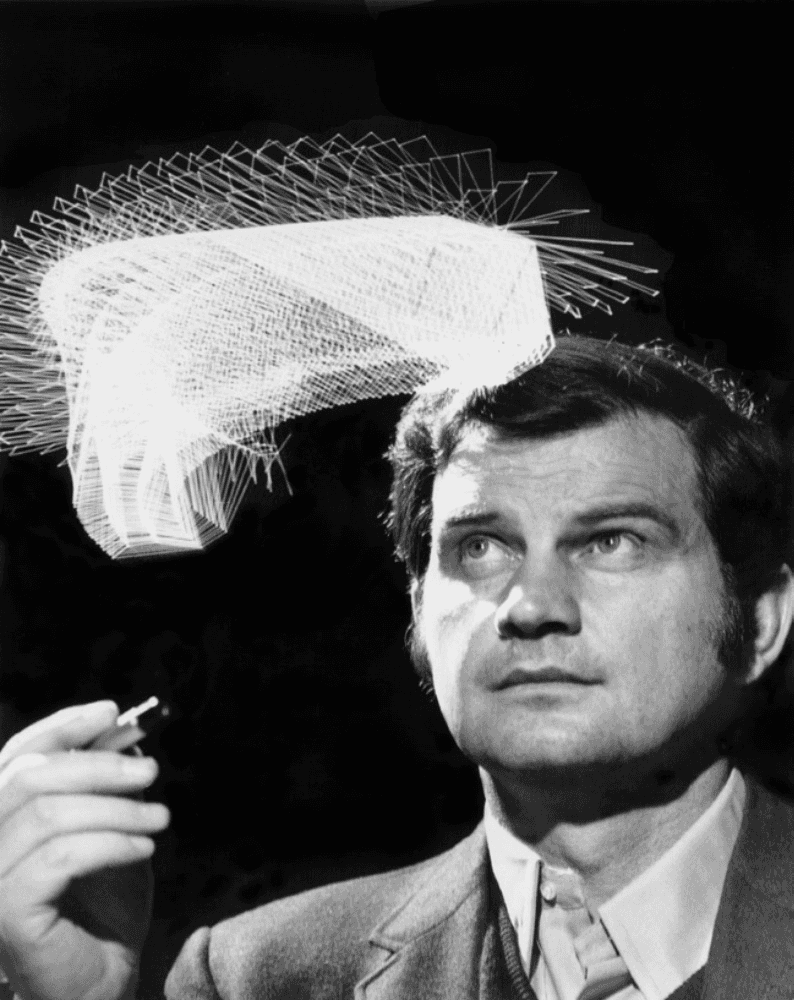
Charles Csuri (1922–2022) was one of the earliest figures in computer art and animation. He has been described as the “father of digital art and computer animation” (Smithsonian Magazine, 1995; ARTnews, 2022).
Csuri trained as a painter and sculptor at The Ohio State University and began exhibiting professionally in the 1950s, including solo exhibitions in New York. By the early 1960s, he had begun working with computers, becoming part of the first generation of artists to establish computation as an artistic medium.
Csuri’s work has been showcased and acquired by institutions internationally, including the Museum of Modern Art (MoMA), the Whitney Museum of American Art, Tate Modern, the Victoria and Albert Museum (V&A), ZKM, Buffalo AKG Art Museum, Kunsthalle Bremen, the Museum of Contemporary Art Zagreb, LACMA and the Jeu de Paume. His work has also been presented at the Venice Biennale and the Budapest Biennale.
Csuri continued making art into his late nineties. Across more than six decades, his practice developed alongside the emergence of computer art, while his work as an artist, educator and researcher contributed to the development and recognition of the field.