Artist Statement
I. Origin: From Broken Printer to Tabcorp
This project began two years ago with Broken Printer, continuing a thread I’ve returned to many times: how work becomes an all-consuming structure that quietly eats everything else. In my previous projects - Where’s My Water (2015), Impact (2024), and Broken Printer (2024) - I’ve been circling the same feeling: the self as a production device that’s always outputting, always “on,” but somehow still malfunctioning. And it’s hard to unsee how normal that condition is. Many people spend a huge portion of their lives inside systems they didn’t design, doing work thzey often don’t love, learning to fit into a hierarchy that mostly sucks.
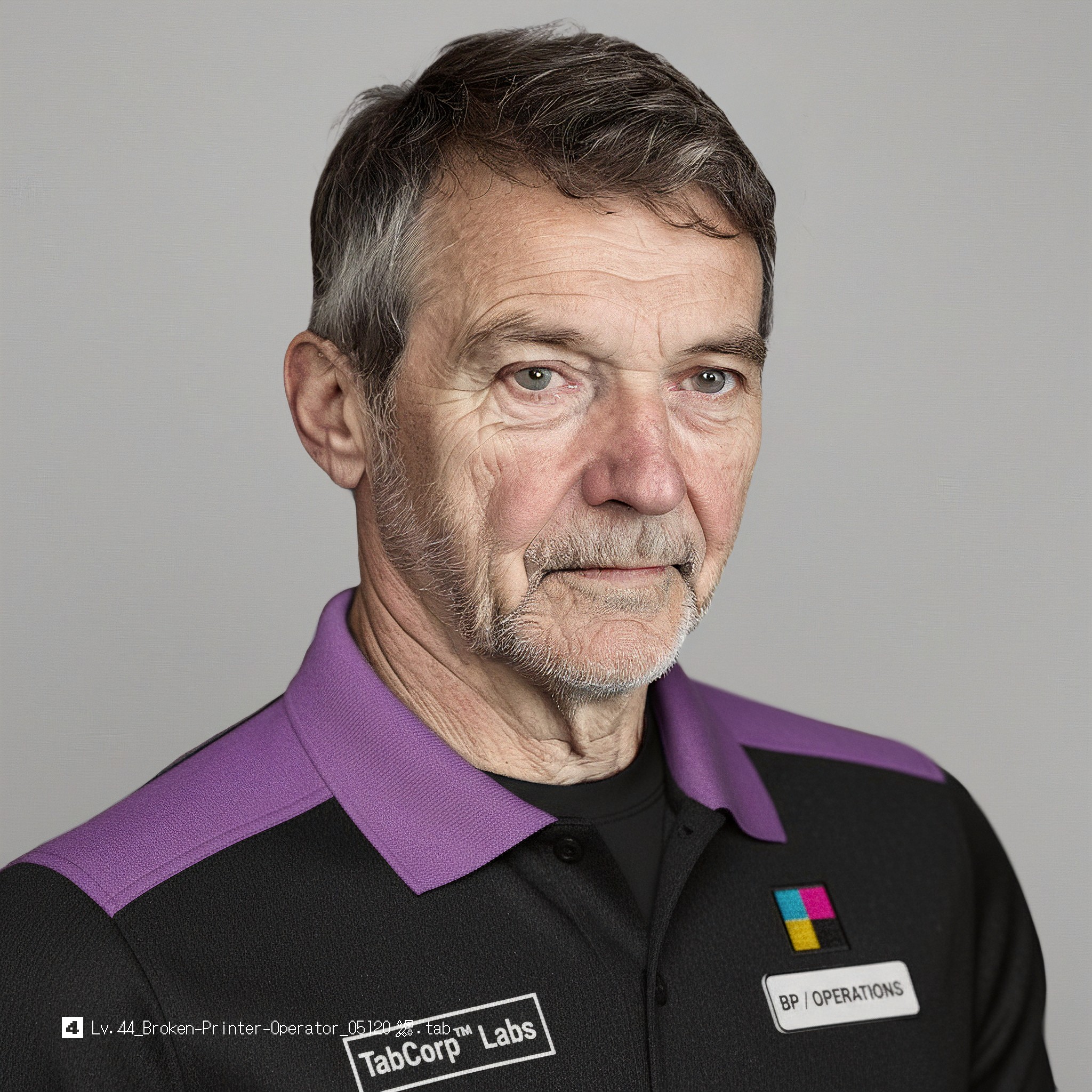
Tabcorp started as a joke, a logo to slap on “Recycled” Broken Printers. Over time, it became the lore for an ominous transnational mega-company. In the context of the work, Tabcorp is a fictional surrogate for the real-world corporations that increasingly shape what daily life feels like, what politics becomes, and even what “truth” is. It is a world where networks of subsidiaries and brands are so pervasive they start to resemble a conspiracy, even when it’s “just” bureaucracy.
II. Medium: The PFP as a Corporate Asset
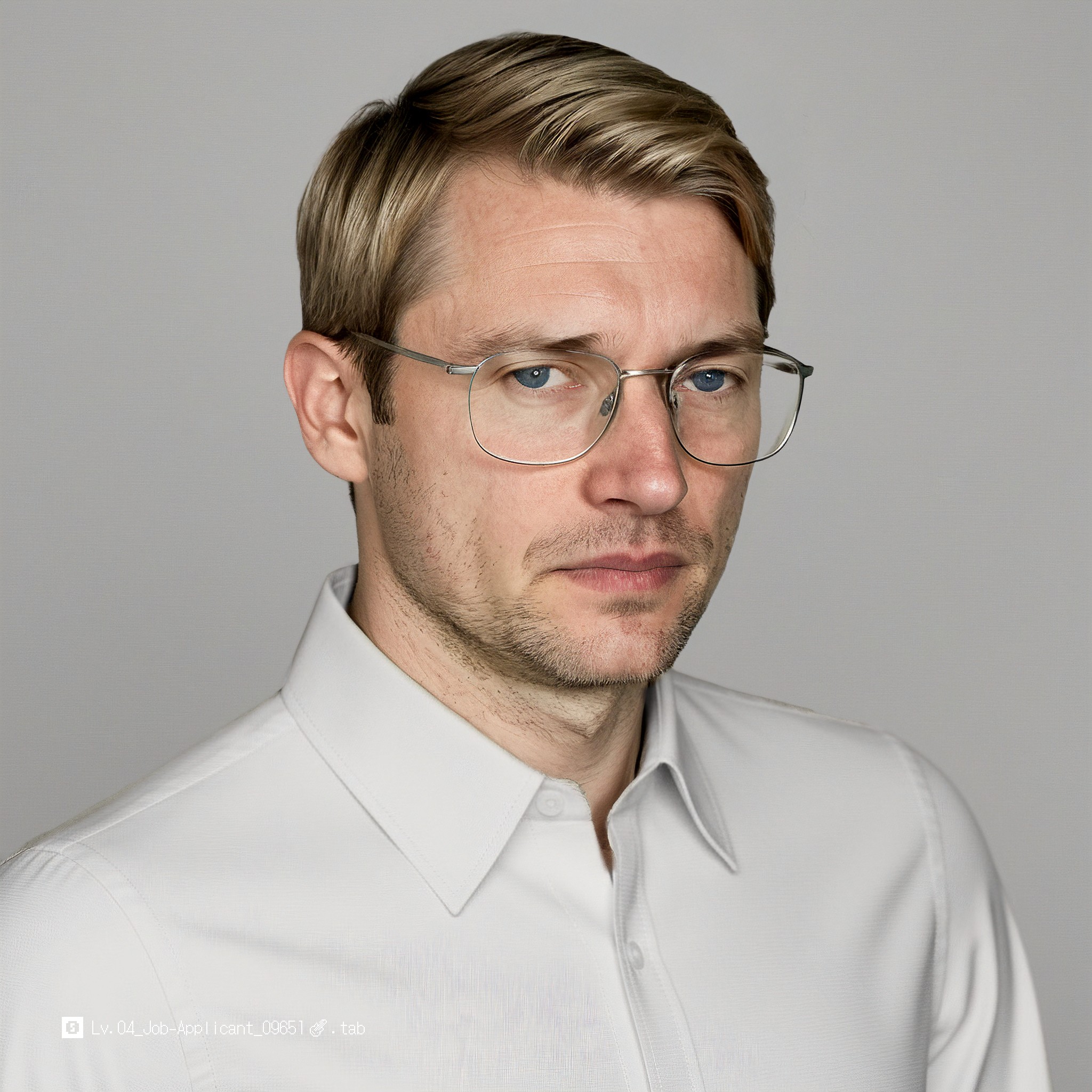
With Human Resources, I wanted to move from documenting my own "malfunction" to documenting the "factory" itself. I chose the PFP format because it is the most crystallized, historically inevitable genre to come out of social media and crypto. PFPs are the masks we wear over our default corporate headshots. They are also the most derided form of NFT - the thing people point to when they say “crypto scam.” I wanted to take that format seriously enough to examine it from the inside, and to use the genre itself as part of the conceptual framework of the project.
III. Execution: Mapping Power, Not Diversity
The core question of the project was: What kind of PFP would an evil corporation manufacture to catalog its own human assets? I considered mapping the demographic reality of Earth, but that quickly felt like turning representation into extraction. Instead, I chose a standardized, white male mannequin as the base for all 10,000 portraits and this became the conceptual core. This is not a fantasy of a corporate utopia; it is a snapshot of how power reproduces itself. By using my own demographic, I am locating myself inside the critique rather than pretending I am looking down from the outside.


IV. Taxonomy: The Post-Truth Hierarchy
The hierarchy of Human Resources is intentionally unstable. It blurs the line between the boardroom and the "backroom":
• The High Rungs: “Chief Financial Officer” and “Government Lobbyist” sit beside “Televangelist” and “Image Makeover CEO. (Modern Zuck Style)”
•The Service Rungs: “Call Center Agent,” “Barista,” and “Gig Worker” represent the disposable nature of the modern labor force.
•The Fringe Rungs: Roles like “Bot Farm Overseer,” “Crisis Actor,” and “False-Flag Operative” reflect a post-truth economy where conspiracy and influence have become plausible line items.
V. Process: The Bureaucratic Image Factory
Formally, the work is built like a factory. I spent the past year building a Dockerized ComfyUI pipeline with rclone + Wasabi for automated output sync, wrapped in an API-driven render queue so I can orchestrate render nodes across the globe. This production logic is part of the meaning. I am not "prompting" images; I am building a system that performs the project’s claim: identity manufactured through templates, categories, and compliance. Human Resources is a portrait of how power reads now, a single corporate continuity where work, media, politics, and entertainment share the same administrative grammar. There is humor here, but it isn’t "cute." It is meant to be a little abject - a little too close to the thing it’s describing.
Bio
Tabor Robak is an American digital artist, renowned in the field of new media, currently based in Paris. He began his digital art career at age 13 as a Photoshop editor and later obtained a Bachelor of Fine Arts from the Pacific Northwest College of…