SOLOS is proud to present No Exit, a new body of works by the British artist RJ.
In No Exit, RJ creates intimate, slightly off-kilter figurative scenes that capture ordinary moments of life lived through screens. Domestic interiors are bathed in unnatural light. People appear half-present, absorbed in their phones - lying in bed, sitting beside someone, or drifting through everyday routines. Nothing dramatic unfolds on the surface, yet a quiet loneliness and sense of disconnection runs through the works. People may be physically together, but their minds are elsewhere. The paintings hover between presence and absence, attention and distraction.
At Dallas Art Fair, the works will be presented on phones. This mode of display is extension of the exhibition’s logic: RJ’s paintings are made digitally, and depict lives increasingly mediated by handheld devices. Encountering the works on a phone places the viewer inside the same conditions the paintings describe, collapsing the distance between subject, medium, and experience. The format sharpens the intimacy of the scenes while underscoring the exhibition’s central tension — that the screen can function at once as a site of connection, absorption, and estrangement.
Booth G1
Dallas Art Fair
VIP Preview: April 16
Public Days: April 17-19
Fashion Industry Gallery
1807 Ross Avenue
Dallas, Texas 75201

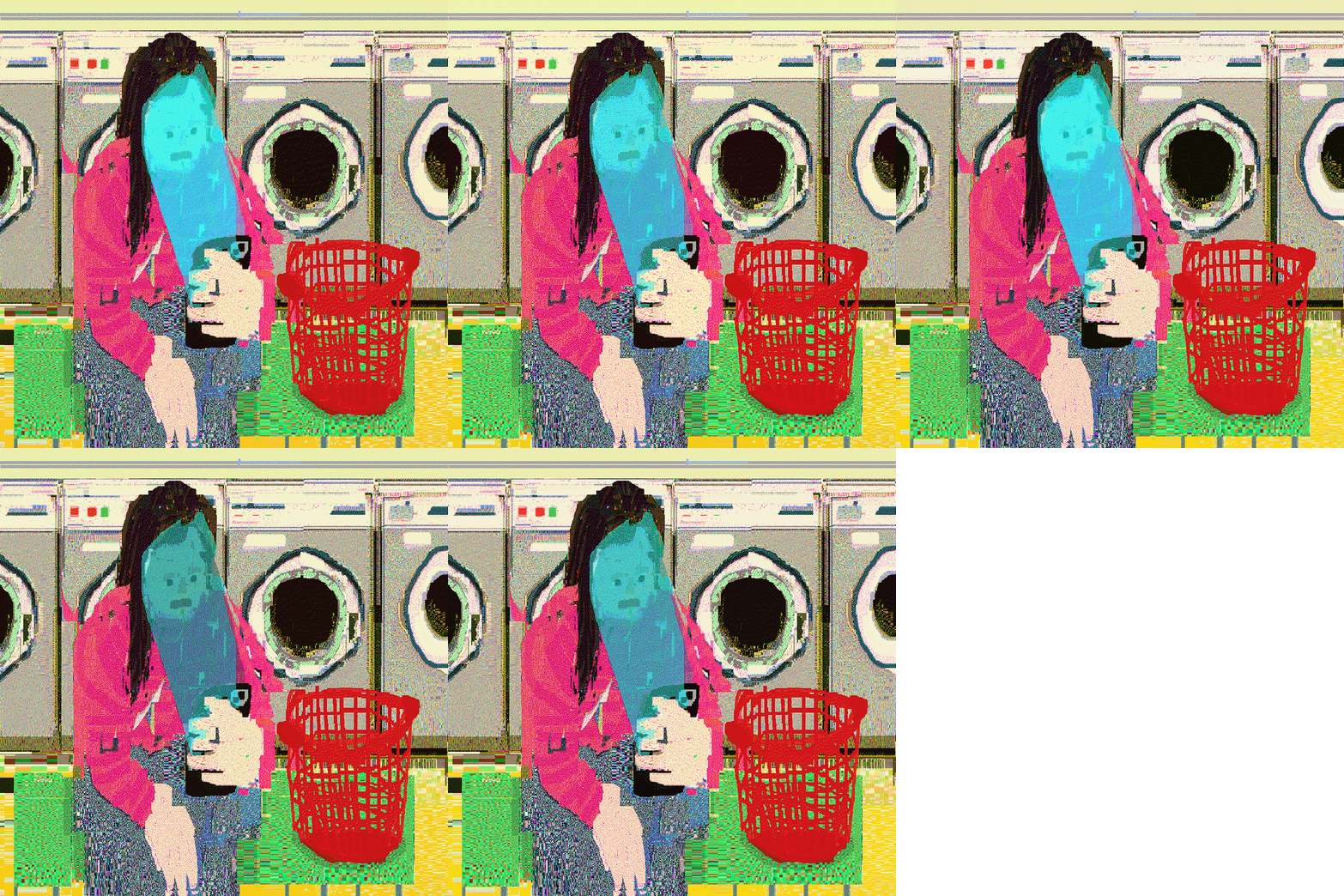
RJ builds each piece pixel by pixel as a digital painter. His style is instantly recognisable: bold colours and large blocks of colour give the compositions an apparent simplicity, almost naïve quality. This simplicity is deliberate. It pushes back against the overproduced, AI-perfected imagery that dominates contemporary visual culture. Rather than aiming for photorealism or high resolution, the works remain slightly clumsy and childlike. The marks stay expressive and visible; the process feels genuine and in progress rather than fully resolved. This looseness and imperfection give the paintings texture, character, and emotional depth.
This hands-on approach to digital painting is at the core of RJ’s practice. By treating each individual pixel like a deliberate brushstroke, he retains the tactility, decision-making, and emotional weight traditionally associated with painting, while embracing the glowing, constrained aesthetics of the digital screen. When animated into short GIFs, the scenes gain movement and transience that perfectly mirror the scrolling, flickering nature of modern digital life.

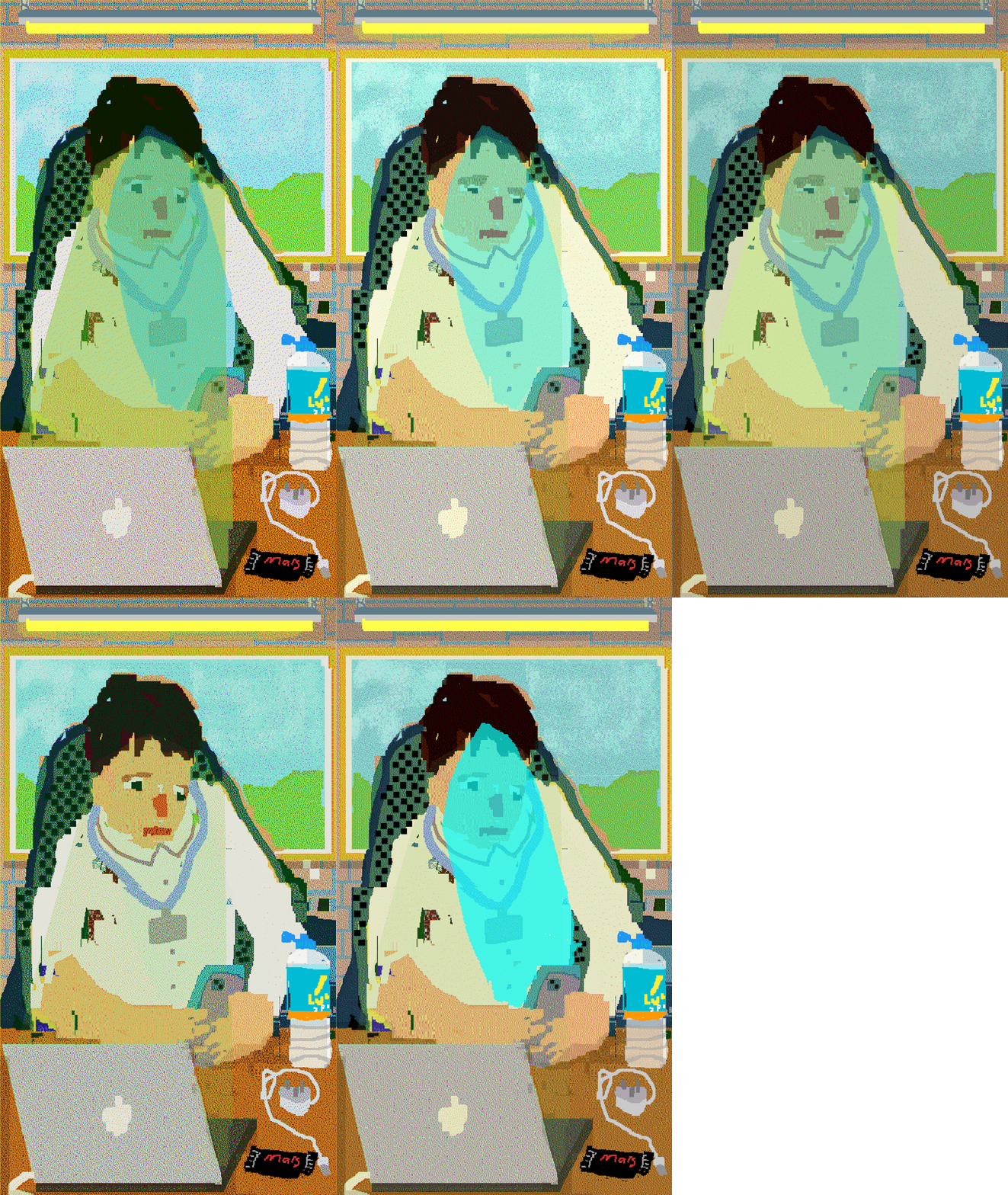
The No Exit series draws particular influence from Lucian Freud, especially in the psychological weight carried by the figure. Where Freud painted from direct physical presence and intense observation, RJ works through distance. His figures are imagined rather than observed from life - present but not fully there - yet they carry a similar tension and emotional density.
In March 2026, Pulitzer Prize-winning critic Jerry Saltz spotlighted one of the works from the exhibition, The Search, on Instagram, praising “the fragmented look and flickering electrified feel of modern life in the work of @rj16848519”. With No Exit, RJ delivers a distinctive and timely contribution to contemporary painting - revealing how technology reshapes our most ordinary, and most intimate moments.

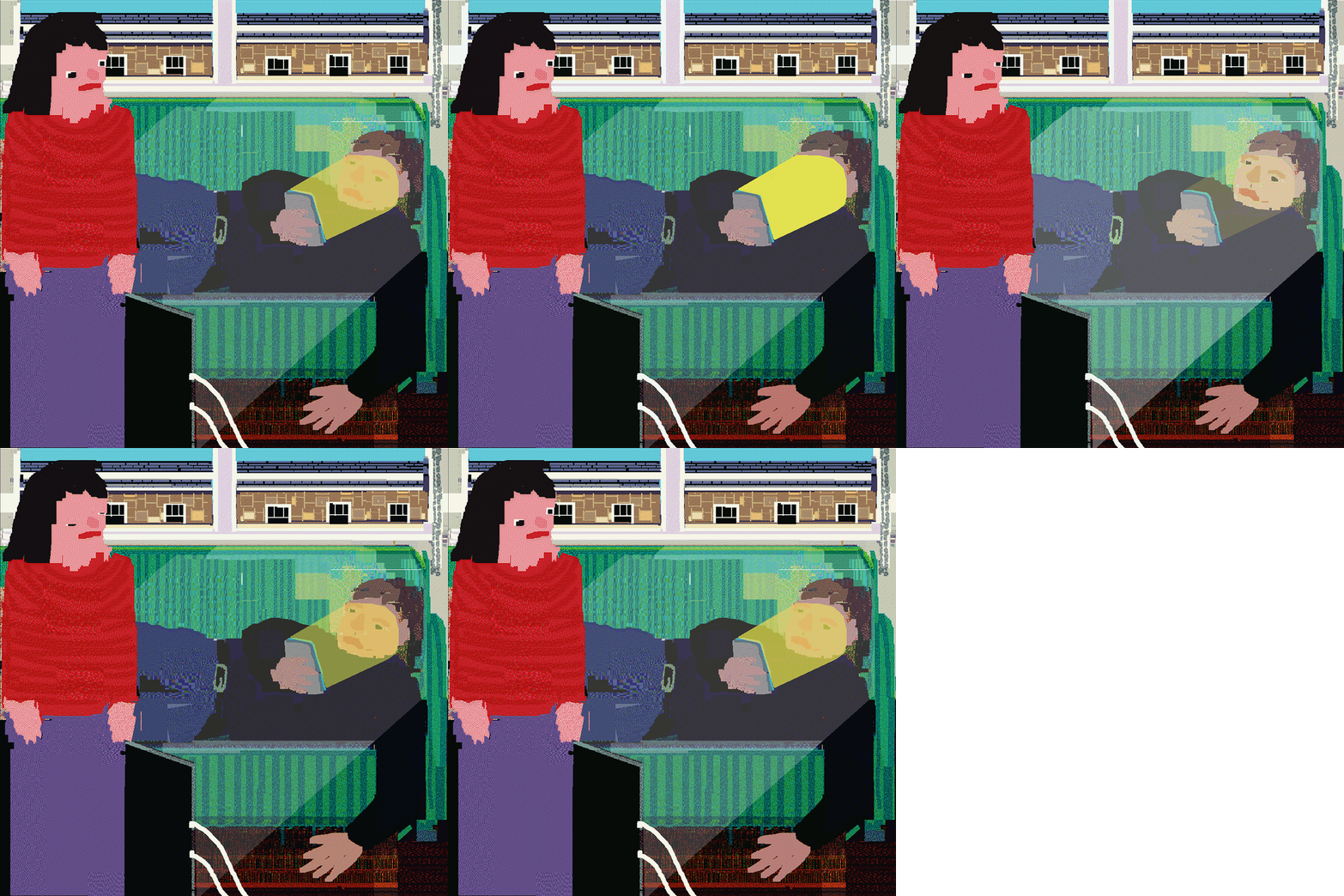
RJ studied Classics at the University of Cambridge, completed an MA in Modern Literature, and earned a PhD in Contemporary American Fiction, focusing on modernism, metamodernism, and theories of intertextuality. He only began making art seriously around 2021, yet his output already feels mature, poetic, and attuned to the textures of screen-mediated existence. While many artists continue to explore light, atmosphere, domesticity, and the poetry of the mundane on canvas, RJ extends these concerns into the screen-dominated realities of the 21st century.
Bio
RJ is a digital artist based in London, working with pixels, AI and GIFS. After reading Classics at Cambridge University, he went on to study an MA and then PhD in contemporary literature, in which he specialised in postmodernism, meta-modernism and theories of intertextuality.